Sitecore CDP offers a flexible and extensible data model that enables organizations to manage their data as per their needs. CDP captures, unifies, and activates customer data in real time across multiple channels. Its purpose is to build single and coherent customer profiles, which then allow for more targeted personalization. If an organization has custom data models that need to be managed in CDP, they can be easily handled using data extensions.
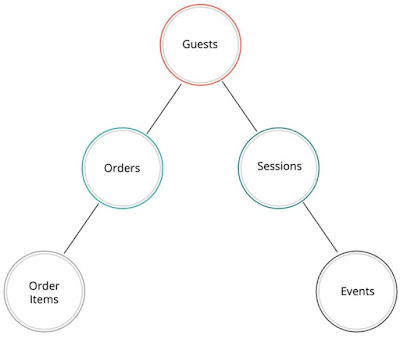
In the above image, a Guest, which is a customer/user, can have multiple orders as well as multiple sessions. An order can also have multiple order items, and similarly, a session can have multiple events.
Core Entities
Guests
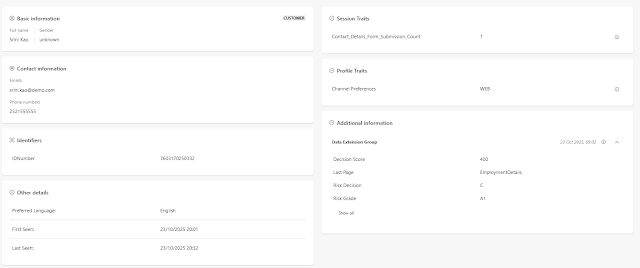
A Guest profile is created in CDP whenever a guest interacts with the brand using any channel. A Guest is the central object in the data model that represents a single customer. A guest data extension in Sitecore CDP allows an organization to specify custom attributes with key-value pairs.
A Guest profile can have the below attributes:
-
Name
-
Guest Type (Known or Anonymous)
-
Email
-
Phone Number
-
Identifiers – List of identifiers (e.g., email, loyalty ID, browser ID)
-
Gender
-
Custom attributes
Guest Type
There are 3 types of guests in CDP, as below:
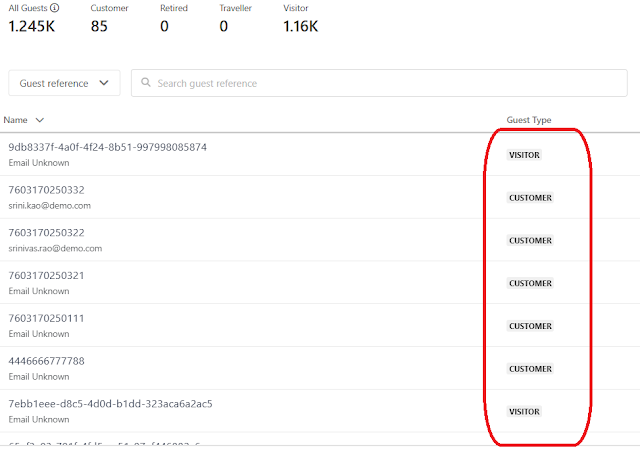
Visitor – A visitor is a guest who has not provided enough identity information or has provided partial identity information but not enough to meet the organization’s identity rules. So anyone coming to the website as an anonymous user is considered a visitor in CDP.
Customer – A customer is a guest who has provided enough identity information according to your organization’s identity rules. In CDP, you can create identification rules like customer ID, email, or phone number, but the only condition is that it should be unique. That means when a guest comes to the site and provides the information you have set up for CDP identification rules (for example, email or customer ID), that visitor becomes a customer.
Retired – A retired guest profile is archived because it contained data that was migrated to another guest profile. You cannot access a retired guest profile.
Sessions
A session represents a user’s interaction data — a group of events over a period of time. The Timeline tab in a Guest Profile offers a detailed vertical timeline featuring the guest’s last 100 sessions of interactions with your organization. You can scroll through this timeline to follow each guest’s chronological engagement history.
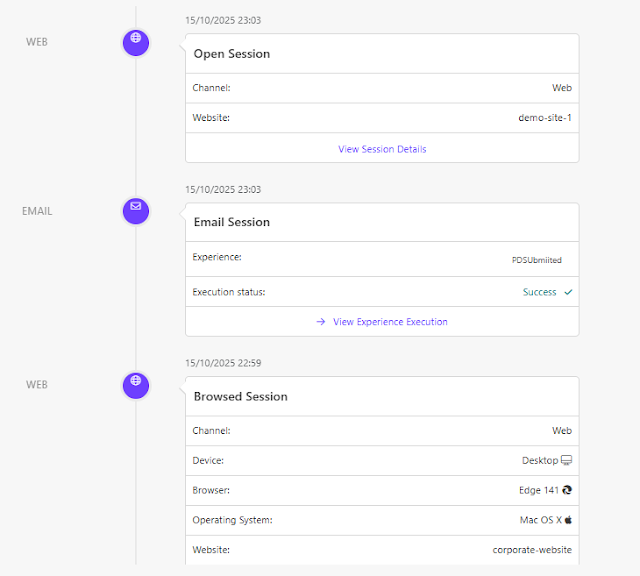
Below are some basic interactions in CDP:
-
Open Session – If a user is visiting the site and, at the same time, we check the interaction in the Timeline tab of the guest, we can find open sessions in the interaction.
-
Browsed Session – After visiting some pages, if the user leaves the site, the open session is converted into a browsed session.
-
Converted Session – When a user visits the page and purchases some product after adding them to the cart, that session becomes a converted session.
-
Abandoned Session – When a user visits some pages on the site and adds products to the cart but leaves the site without completing the purchase, that session becomes an abandoned session.
Events
An event captures interactions and behaviors like page views, button click events, API call events, purchase data, login data, etc.
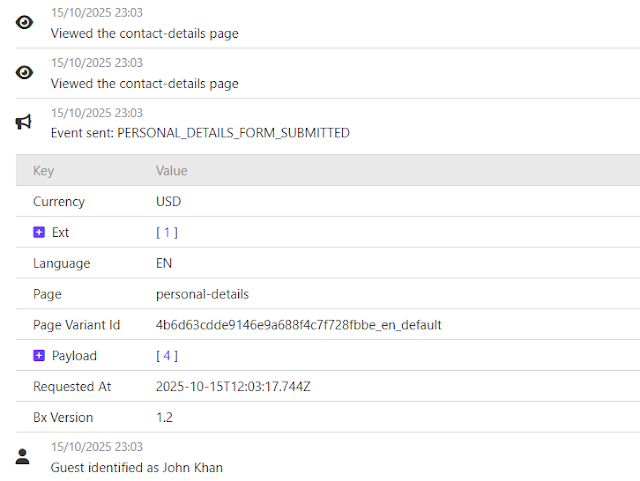
Event Attributes:
-
Type: Type of event
-
Timestamp: When the event occurred
-
Channel: Source of event (e.g., web, mobile)
-
Properties: Event-specific details (e.g., page URL, revenue)
Order & Order Items
Sitecore CDP captures orders and purchase details using events. All the information related to order transactions, individual order items, payment history, and guest association is represented using events.